
Best tree loppers in Joondalup and Perth’s northern suburbs (2026)
Table of Contents
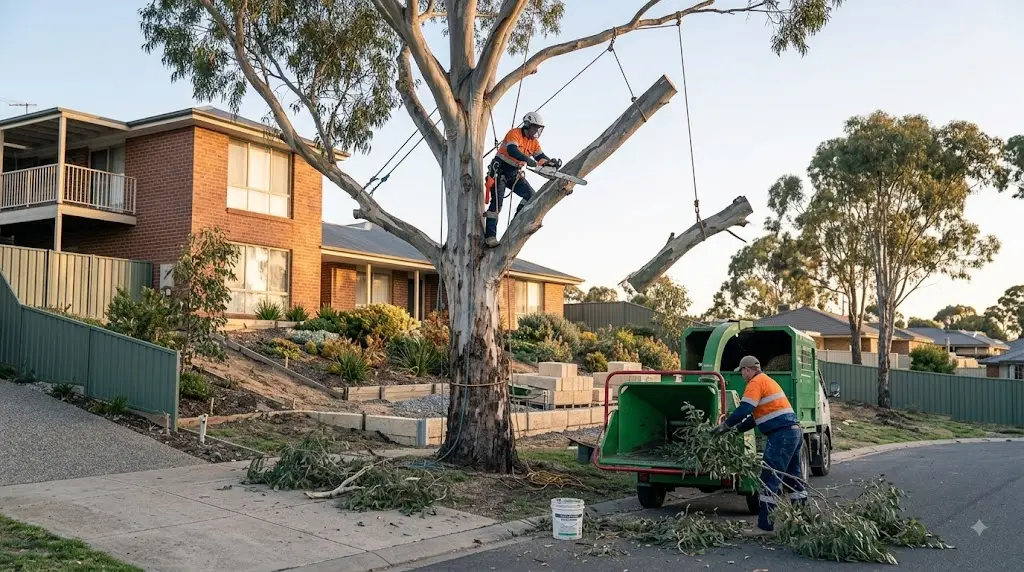
Storm season, a jacaranda that’s outgrown the block, or a dead limb hanging over the kids’ trampoline — sooner or later every northern-suburbs homeowner needs a tree bloke. This is the ten best-rated tree loppers and arborists working Joondalup, Wanneroo, Clarkson, Butler, Kinross, Mindarie and the surrounding coastal corridor, ranked on real Google reviews. Underneath the list you’ll find what this work actually costs in Perth right now, the council rule that catches people out, and the five things that tell you you’re about to hire a cowboy.
How we ranked these
- Ranked on Google rating weighted by review volume — a 5.0 off three reviews doesn’t outrank a 4.9 off a hundred. The formula pulls low-volume ratings toward the category average so the list rewards a proven track record, not a lucky week.
- Minimum bar to appear: 4.3 stars and at least two genuine reviews.
- Every operator’s location was checked by map coordinates, not by whatever suburb they’ve put in their business name. Firms based south of the river or in the hills were left for those articles.
- Supply yards, mulch sellers and general landscapers who don’t actually climb were excluded.
- Nobody paid to be on this list. When a business does buy a Featured spot it gets a clearly marked “Featured” badge — and the review-based order underneath it never changes. If that ever stops being true, this page is worthless to you and to us.
The top 10 tree loppers in Perth’s northern suburbs
Real Tree Solutions
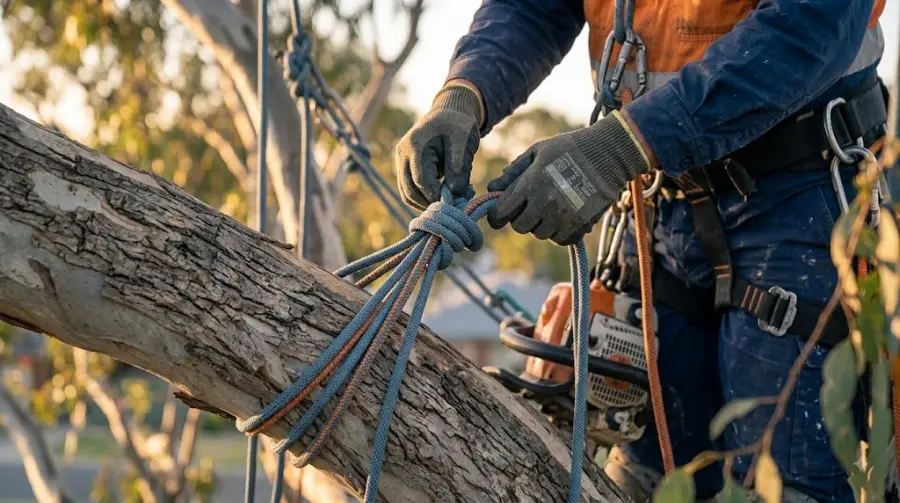
Based off Nanda Close in the Wangara industrial pocket and working the whole northern corridor. A hundred and forty-two reviews without a single rating below five is rare in this trade — that usually means quoting is accurate and the site gets left clean. Reviewers keep mentioning careful cutting and pruning rather than just knocking things over, which is the difference between an arborist and a bloke with a chainsaw. Listed as an arborist service, and they answer after hours.
All Trees Perth
Fairway Circle, Connolly. The reviews that stand out are the big jobs — one customer describes taking ten metres off a pair of thirty-five metre trees. That’s serious climbing and rigging work, not hedge trimming, and it’s the kind of job where you want someone who’s done it before rather than the cheapest quote. A hundred-plus reviews at 4.9 across that sort of work is a solid record.
Lifestyle Tree Services
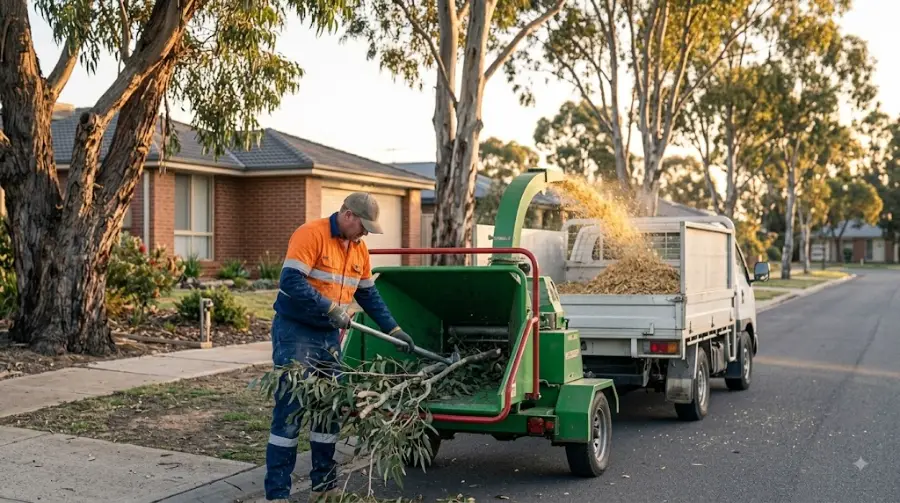
James Spiers Drive, out Wanneroo way. Smaller review count than the two above but the tone is consistent — a lot of customers describe them as their go-to for ongoing tree maintenance rather than a one-off removal. Repeat work is a good signal in this trade; nobody has a tree bloke back twice if the first visit was a mess.
What tree work actually costs in Perth (2026)
Tree pricing looks random from the outside because nobody quotes the same way. What you’re really paying for is three things: how hard the tree is to get at, how much weight has to come down in a controlled way, and where the green waste goes. A ten-metre gum in an open front yard is a morning’s work. The same tree three metres off a neighbour’s patio, with power lines over the fence, is a rigging job that takes twice as long and needs twice the gear.
| Job | Typical Perth range |
|---|---|
| Small tree removal (under 5 m, clear access) | $300 – $700 |
| Medium tree removal (5 – 10 m) | $700 – $1,800 |
| Large tree removal (10 – 20 m, clear access) | $1,800 – $4,000 |
| Large tree, tight access or crane required | $4,000 – $10,000+ |
| Cocos / Queen palm removal | $250 – $800 each |
| Stump grinding (small – medium stump) | $120 – $450 |
| Stump grinding (large or multiple) | $450 – $1,200 |
| Crown lift or reduction, medium tree | $250 – $600 |
| Hedge trimming, two-person crew | $90 – $150 per hour |
| Extra green-waste removal | $100 – $400 |
| Emergency or after-hours storm callout | $180 – $350 callout, then hourly |
Indicative ranges for the Perth metro area, current as at 2026. Get three written quotes for anything over about $1,500 — the spread on big removals is wider than any other trade on this site.
Two things that change the price more than anything else
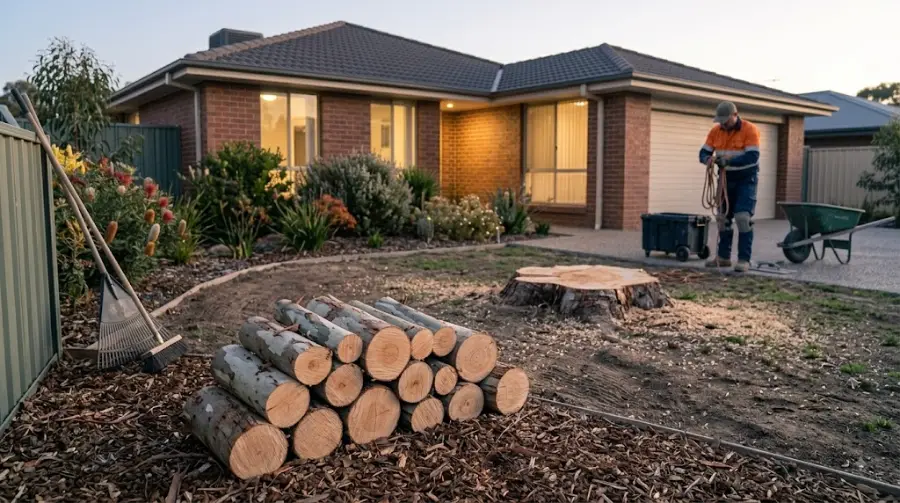
Stump: in or out? Plenty of quotes cover the tree and quietly leave the stump. Grinding is a separate machine and a separate trip, so if it isn’t itemised on the quote, assume it isn’t included. Ask for it in writing. Also ask how deep they grind — 100 mm is enough for lawn, but if you’re laying a slab or planting a replacement tree you want 300 mm plus, and that costs more.
Where does the mulch go? Chipping on site and leaving you the mulch is free for them and can be free for you. Carting it away means tip fees. If you’ve got garden beds, taking the mulch can knock a chunk off the quote — just be aware fresh chip from a diseased tree shouldn’t go straight onto beds.
The council rule that catches people out
This is the part most people find out about too late. Western Australia doesn’t have one blanket tree law — the rules sit with your local council and, for native bush, with the state.
- The verge tree isn’t yours. Street trees on the verge belong to the council even though you mow around them. Removing or heavily pruning one without approval can land you with a fine and a bill for a replacement. Ring the council first; it’s usually a free form.
- Newer estates often have conditions. If your block came out of a recent subdivision, the development approval may name specific trees that have to stay. Check your settlement paperwork before you book anyone.
- Native vegetation is regulated by the state, not the council. Clearing native vegetation in WA generally needs a permit from DWER unless an exemption applies. This bites on larger blocks and semi-rural lots out toward Yanchep, Neerabup and Carabooda. The penalties are not small.
- Some councils keep a significant tree register. If your tree is on one, it’s protected regardless of whose land it’s on.
A decent operator will ask you whether you’ve checked. If they don’t ask at all, that tells you something.
Don’t get ripped off — five red flags
- The day-after-the-storm door knock. Unmarked ute, no signage, “we’re working just up the road and had a cancellation”. Storm weeks bring them out. Nobody legitimate needs to doorknock in Joondalup in July.
- Won’t produce a certificate of currency. Tree work is the highest-risk job anyone does on a suburban block. If a limb goes through your roof or a bloke comes off a ladder in your yard and there’s no public liability and no workers comp, that lands on you. Ask for the certificate, not a verbal “yeah we’re covered”. Anyone who gets shirty about the question has just answered it.
- A firm price over the phone, sight unseen. Nobody can price a removal without looking at access, what’s underneath, and where the truck can park. A phone quote is either a lowball that’ll grow on the day, or a guess.
- They’re happy to “top” the tree. Topping means sawing the crown off flat. It’s cheap, it’s quick, and it wrecks the tree — the regrowth comes back thin and badly attached, and in five years you’ve got a genuinely dangerous tree instead of a big one. A qualified arborist will push back and offer a crown reduction instead. Take the pushback as a good sign.
- Half the price of everyone else. There are only a few places that money can come from: no insurance, no tip fees because the waste is going somewhere it shouldn’t, no stump, or no experience. Cheapest quote on a big removal is almost always the most expensive outcome.
Before you hire: the checklist
- Written, itemised quote — tree, stump, green waste and clean-up listed separately.
- Certificate of currency for public liability, plus workers compensation if they’ve got employees.
- Qualifications: AQF Level 3 in arboriculture is the working benchmark. Level 5 if you need a written report for council or an insurer.
- Council approval sorted — verge tree, significant tree register, or native vegetation.
- Confirm who cleans up, and whether the mulch stays or goes.
- Recent local reviews, not just a high average — check the dates.
- What happens if it rains. Wet-weather policy in writing saves an argument later.
Common questions
How did you rank these?
Google rating weighted by review volume, so a 5.0 off a handful of reviews sits below a 4.9 off a hundred. Minimum 4.3 stars and two reviews to appear. Location verified by map coordinates, not business name.
Are any of these paid placements?
Not on this page. When a business buys a Featured spot it carries a visible “Featured” badge, and the review-based order below it is never rearranged to suit a payer.
Do I need council approval to remove a tree on my own property?
Often no, but not always. Verge trees belong to the council, some councils keep a significant tree register, newer subdivisions can have retention conditions, and clearing native vegetation generally needs a state permit. One phone call to your council settles it.
What’s the difference between lopping and pruning?
Lopping and topping mean cutting big sections off with no regard for the tree’s structure. Pruning or crown reduction means taking weight off at the right points so the tree stays sound. Lopping is cheaper today and costs more later.
When is the best time to prune in Perth?
For most non-natives, late winter before the spring push. Get storm-risk work done before the first serious front rather than after — everyone rings at once once branches are already down, and the price reflects it.
Are you a northern-suburbs tree lopper?
Claim your listing free, or get a Featured spot on this page.
Add your business free Browse all WA tree surgeonsRankings based on publicly available Google review data collected 7 August 2026. Reviewed monthly.