
Best concreters in Perth Hills (2026)
Table of Contents
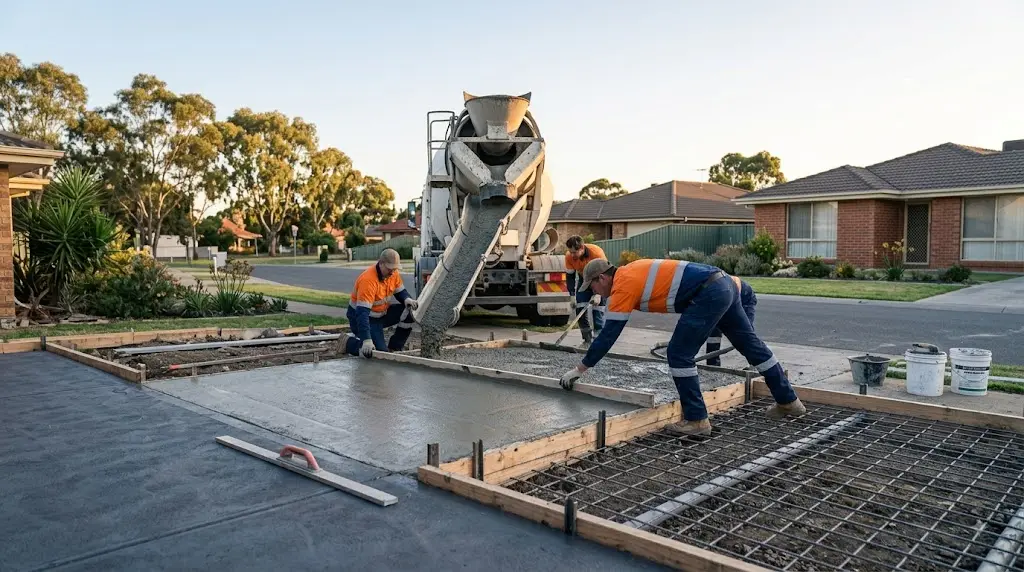
These are the best-rated concreters working the Perth Hills, up on the Darling Scarp from Kalamunda, Lesmurdie and Gooseberry Hill, across to Mundaring, Glen Forrest and Sawyers Valley, and down through Roleystone and Karragullen. They’re ranked on real Google reviews, not on who paid us. Concreting up here is a proper service-area trade run off a ute, a bobcat and a concrete truck, so we checked the map pin on every operator and kept the list to firms genuinely based in and working the hills, whether you need a driveway, a shed or house slab, a path, an exposed-aggregate finish, or an old cracked slab pulled up and re-poured. We’ll be straight with you about one thing: the hills is a small concreter market. Search “concreter” in most hills suburbs and Google fills the page with Midland batching plants, Kewdale supply yards and concrete-pumping firms that don’t actually pour and finish a slab. We’ve stripped those out and listed only the genuine local crews with a hills pin and a real run of reviews, which is why this list is shorter than our metro pages, and honest. One thing that matters more up here than anywhere on the coastal plain: the ground and the block. The hills sits on granite and laterite rather than sand or clay, blocks are often steep or stepped, driveways are long and truck access can be tight through the trees, and all of that shapes both the job and the price. What follows is the genuine local operators, what concreting actually costs in WA in 2026 and why a hills block runs a touch dearer, the site factors that decide whether your slab lasts, the warning signs of a dodgy job, and a checklist to run before you pay a deposit.
Featured concreters
These spots are for Perth Hills concreters who want to stand out on this page. None are taken yet, so the full review-ranked list is right below. That ranking is earned off Google reviews and never for sale. Are you a concreter working Kalamunda, Mundaring, Roleystone and the hills? Featured spots start at $50 a year.
Get a Featured spot ▸How we ranked these
- Google reviews do the ranking. We start with every concreter’s live Google star rating and the number of reviews behind it, pulled fresh from Google Maps.
- Rating, weighted by volume. A 5.0 off two or three jobs isn’t proof yet, so we weight the score by review count. On a small market like the hills the review counts are low across the board, which means the weighted scores land very close together, so we’ve led with the crews that pour new slabs and driveways and kept the honest detail on each one’s record right in front of you rather than hiding behind the order.
- Based in the hills, verified on the map. Concreting is a mobile trade, so we checked the actual map location of every operator and kept the list to firms with a pin genuinely up on the scarp, from Kalamunda and Lesmurdie across to Mundaring and down to Roleystone and Karragullen. We left off the crews sitting down in Midland, Osborne Park, Kewdale or Gosnells, because a pin fifteen kilometres away and a thousand metres lower tells you little about who will actually drive a truck up your hills driveway.
- It’s a small market, and we won’t pad it. The hills genuinely has only a handful of review-backed local concreters. Most of what a hills search throws up is batching plants, mini-mix supply yards, reo suppliers and concrete-pumping contractors, which sell or pump material rather than pour and finish your slab, so we’ve excluded them. We’d rather show you four real local crews you can check than pad the list to ten with suppliers and out-of-area names.
- A real record, with the thin ones flagged. We include local concreters with a genuine run of reviews and are upfront where a record is short or where a business is a repair specialist rather than a new-pour crew, so you can weigh it yourself.
- Paid spots are labelled, and never jump the queue. When a business pays for a “Featured” spot it’s marked as such. The review-based order below does not change to favour a payer. Right now, no spots are sold.
Stone Perfect Concrete
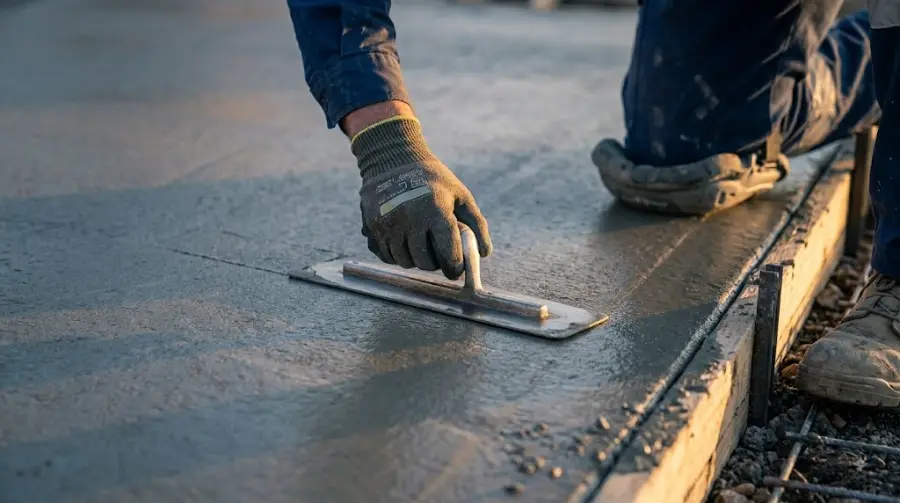
A clean 5.0 across 3 reviews tops the weighted score on this page, and just as importantly the pin sits right up in the hills around Karragullen and Roleystone, so this is a genuine local crew rather than someone driving up from the flats. They pour driveways, slabs and paths, which suits the hills mix of a long rural driveway, a shed or house slab on a sloping block, or an old cracked slab pulled up and re-laid. The review count is still building, so read the reviews yourself and, on a hills block, get the truck access, the base prep into the rocky ground and the slab thickness and reinforcement all spelled out in writing before you commit.
View listing & contact ▸Roleystone Concrete and Constructions
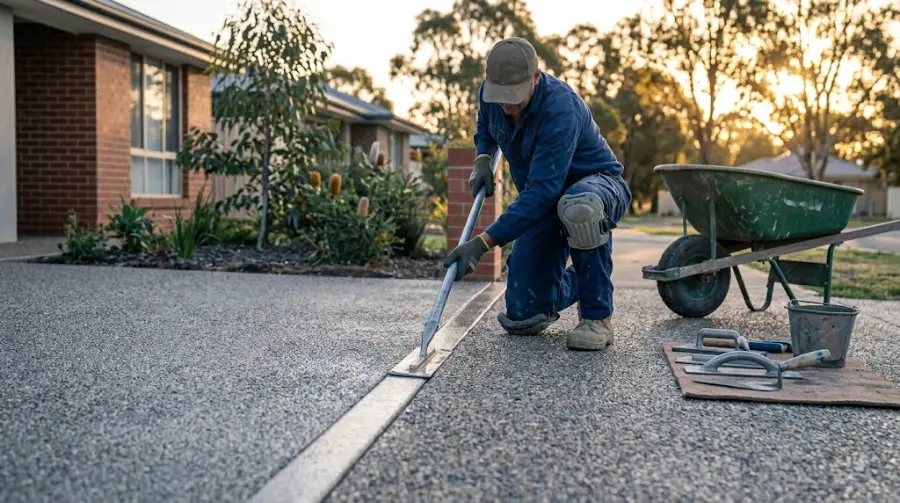
A 4.3 across 10 reviews is the deepest, most-tested record on this page, and the name says it all: they’re based in Roleystone and work the southern hills around Karragullen, Kelmscott and Araluen. On the raw weighted score they sit a whisker behind top spot because of the star average, but with the most reviews on the page and a genuine hills base, they’re a natural first call for the Roleystone end, a driveway on a sloping block, a shed or house slab, or a path re-poured. Read the reviews, and on a steep or rocky block get the access, the base prep and the reinforcement written into the quote.
View listing & contact ▸Artisan Concrete
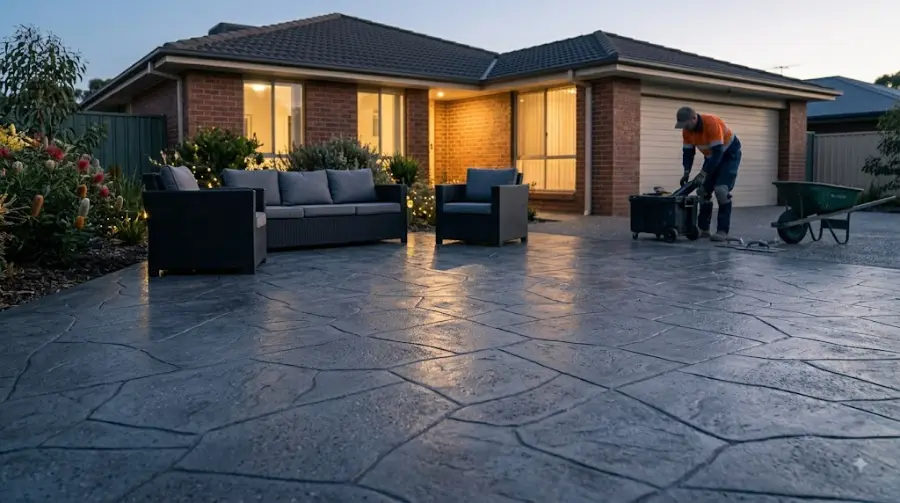
A 4.2 across 5 reviews sits just under our usual 4.3 quality bar, but on a market as small as the hills we’ve included it because it’s a genuine, review-backed local based around the Mundaring and Sawyers Valley end, and that’s exactly where the northern hills is short of options. They pour driveways, slabs and paths, so they suit the Mundaring, Glen Forrest, Mahogany Creek and Chidlow stretch for a rural driveway, a shed slab or a re-pour. With a slightly lower average and a short record, do your homework: read the reviews, ask to see a recent finished job like yours, and get the base prep, thickness and reinforcement in the written quote.
View listing & contact ▸5.0 (3)
A note on the order: the hills is a small market, so review counts are low and the weighted scores sit very close together. We’ve led with the crews that pour new slabs and driveways. Stone Perfect Concrete (5.0 from 3) tops the weighted score; Roleystone Concrete and Constructions (4.3 from 10) carries the deepest, most-tested record and a true Roleystone base, so it’s our first call at the southern end despite the star average; and Artisan Concrete (4.2 from 5) covers the Mundaring end. Apache WA – Concrete Repair Specialists (5.0 from 3) ties top on the raw formula but it’s a concrete repair and resurfacing outfit rather than a new-placing crew, so we’ve listed it separately and last: if your slab or driveway is cracked, sunken or spalling and you want it fixed rather than replaced, that’s exactly the job for them. Worth watching too is Perth Hills Concreting around Pickering Brook and Kalamunda, a genuine local name that only has a single public review so far, so we haven’t ranked it yet, but keep an eye on it as its record builds. Whoever you call, get two or three quotes on the same scope before you commit.
What concreting actually costs in Perth (2026)
Nobody likes ringing a concreter blind on price. These are honest WA ballpark ranges for the common jobs, GST included. They’re a guide to keep you from being overcharged, not a quote, and concreting prices move with your finish, your site and the size of the pour, so the spread on each line is wide for a reason. Most home jobs are priced per square metre once the concreter has seen the site, with the base prep, reinforcement and finish making the difference. Up in the hills, three local factors nudge the price above what the same job costs on the flat: the block, the ground and the access. Hills blocks are often sloping or stepped, so there’s more formwork, more excavation and sometimes a retaining or stepped slab. The ground is granite and laterite rather than soft coastal sand, so digging out and preparing the base is harder work. And truck access is the big one, a long, steep or narrow driveway through the trees can mean a smaller truck, a concrete pump or barrowing the mix in, and every one of those adds to the bill. It’s not a rip-off, it’s the scarp, and a good hills concreter will explain exactly which of these your job runs into.
| Job | Typical WA range | What pushes it up |
|---|---|---|
| Plain grey concrete driveway or slab (supply & lay, per m²) | $70-$105 / m² | Slope and site prep, excavation into rock or laterite, slab thickness, reinforcement, formwork, removal of old concrete |
| Small courtyard, alfresco or path slab (per m²) | $90-$150 / m² | Small awkward or sloping area, hand-barrowing or pump hire, hand-finishing, edge and step detail |
| Difficult truck access (pump or barrow, extra over standard) | +$15-$45 / m² | Long, steep or narrow hills driveway, concrete pump hire, barrowing the mix in, smaller truck loads |
| Long rural / semi-rural driveway (typical total, plain finish) | $6,000-$15,000+ | Length and width, slope, base prep on rocky ground, drainage, access for the truck, finish |
| Exposed aggregate driveway (per m²) | $100-$155 / m² | Stone choice, honing, sealing, curved or detailed edges, slope |
| Shed or garage slab (supply & lay, per m²) | $80-$125 / m² | Thickness and reinforcement for the load, levelling a sloping pad, edge beams, cut into the bank, access for the truck |
| Removal & disposal of old concrete (per m²) | $30-$65 / m² | Thickness, reinforcement in the old slab, hills access, tip fees |
The hills carries its own conditions worth pricing in. The block is the first: a sloping or stepped site needs more formwork, more base prep and sometimes a stepped or retained slab, so it costs more than the same square metres on a flat coastal block. The ground is the second: granite and laterite are harder to excavate and prepare than sand, and a rock shelf can turn a simple dig into a bigger job. Access is the third and often the biggest: a long, steep or tree-lined driveway can mean the truck can’t get close, so the concreter hires a pump or barrows the mix, and that shows up in the quote. Bushfire zones add another wrinkle, since a compliant, all-weather driveway is often part of keeping emergency access to a hills property. However your job runs, the cheap quote is usually cheap because it’s thin on base prep, reinforcement, thickness or the access allowance, the parts you can’t see once it’s poured. Get the thickness, the mesh or bar, the base prep, the access method and any retaining or step detail written into the quote.
Don’t get ripped off: red flags
- No written quote that spells out the slab. A proper concreting quote states the area in square metres, the slab thickness, the reinforcement (mesh or bar), the base prep, the finish and the price. A one-line “concrete driveway, $X” tells you nothing about what’s going in the ground. Get the detail in writing.
- Vague on truck access. Up here access is half the job. A concreter who hasn’t looked at how the truck reaches your pour, whether it needs a pump, a smaller truck or barrowing up a steep drive, is a concreter who’ll hit you with a surprise on the day or cut corners to make it work. Ask directly how they’ll get the mix to the pour.
- Ignoring the slope and the ground. A hills block that’s sloping, stepped or sitting on rock needs proper formwork, base prep and sometimes retaining or a stepped slab. A crew that won’t talk about the fall of the block or the ground underneath is setting your slab up to move or crack. Ask how they’re handling the slope and the base.
- Skipping the base prep or compaction. Compacting and preparing the base is what stops a slab cracking and settling, and on a cut hills pad or a filled bank it matters even more. A crew that wants to pour straight onto loose or unprepared ground is setting your slab up to fail. Ask exactly how they’re preparing and compacting the base.
- A slab too thin, or no reinforcement. A residential driveway should generally be around 100mm thick with steel mesh (commonly SL72) so it can take a car, and a long rural drive that takes a trailer, boat or delivery truck may want more. Watch for anyone quoting a thin slab with no reinforcement to hit a cheap price, it will crack under load.
- No control or expansion joints. Concrete moves as it cures and with heat, so proper control joints are cut in to manage where it cracks. Leave them out and the slab cracks where it likes. A good concreter plans the joints as part of the job.
- Vague on drainage on a slope. On a hills block, water runs, so the slab and driveway need to be set to shed it and channel it away rather than let it pool or wash out the base. A crew that doesn’t set the falls and drainage can leave you with pooling, erosion and movement over time. Ask how the pour is set to drain.
- A big deposit up front. Materials for a pour don’t justify a huge deposit. Be wary of anyone wanting a large slice of the total before they’ve done a thing. A modest deposit with the balance on completion is normal.
- Cash-only, no ABN, no insurance. A concreter with no ABN, no public liability insurance and a cash-only push is a concreter with no accountability if the job goes wrong or someone gets hurt on your property. Ask for the ABN and insurance.
- The quote is well under everyone else’s. On a hills pour the lowball is usually missing base prep, thickness, reinforcement or the access allowance, the exact things that make it last and get it poured. Compare quotes on identical thickness, reinforcement, finish and access, not just the headline number.
- Vague on the crossover permit. A new or widened driveway crossover onto the council verge needs a permit, and the hills spans three councils (City of Kalamunda, Shire of Mundaring and City of Armadale). A concreter who waves that away can leave you wearing the cost of redoing non-compliant work.
Before you hire: quick checklist
- ABN and public liability insurance. Confirm the concreter has a current ABN and public liability cover before any work starts. It protects you if something is damaged or someone is injured on the job.
- Written quote with the detail. Get the area in square metres, the slab thickness, the reinforcement, the base prep, the finish and the price all in writing before you pay a deposit. Vague quotes are where disputes start.
- Truck access sorted. On a hills block, ask how they’ll get the mix to the pour, straight off the truck, by pump, or barrowed, and make sure any access cost is in the quote rather than sprung on you on the day.
- Slope and ground accounted for. Ask how they’re handling the fall of the block and the rocky ground, and whether your job needs retaining, a stepped slab or extra excavation. It’s the biggest driver of both cost and how well the slab lasts up here.
- Reinforcement and thickness spelled out. For a driveway, check you’re getting a slab of adequate thickness (generally around 100mm) with steel mesh. For a long rural drive or heavier loads, ask what extra is specified.
- Base prep and compaction. Ask how they’re preparing and compacting the base, especially on a cut pad or a filled bank. Getting the base right is what stops uneven settling.
- Drainage set for the slope. Confirm the slab and driveway are set to shed water and channel it away rather than pool or wash out the base, which matters most on a steep hills block.
- Control joints planned. Confirm control or expansion joints are part of the job, so the concrete cracks where it’s meant to rather than wherever it likes.
- Right finish for the job. Match the finish to the work: a plain grey slab, an exposed-aggregate driveway or a decorative finish each suit different needs and budgets, and not every crew does all three. Ask to see a recent finished job like yours.
- Crossover permit sorted. For a new or widened driveway crossover, check who is obtaining the permit from your council (City of Kalamunda, Shire of Mundaring or City of Armadale depending on your suburb) and that it’s in place before work starts.
- Recent, specific reviews and references. On a small market, a recent review that mentions the actual pour or finish is gold, and a local job you can go and look at is better still. Ask for one.
Frequently asked
How did you rank these concreters?
By their live Google star rating and the number of reviews behind it, pulled from Google Maps. We weight the rating by review volume so a proven score isn’t leapfrogged by a perfect score from one or two jobs. Because the hills is a small market the review counts are low and the weighted scores land close together, so we’ve led with the crews that pour new slabs and driveways and kept each one’s real record in front of you. We checked the map location of every operator and kept the list to concreters genuinely based up on the scarp, leaving off the Midland batching plants, the Osborne Park and Kewdale crews, the Gosnells firms and the concrete-pumping and mini-mix suppliers that don’t pour and finish slabs.
Which areas does this cover?
The Perth Hills, up on the Darling Scarp. That runs through Kalamunda, Lesmurdie, Gooseberry Hill, Walliston, Carmel, Pickering Brook and Bickley, across the foothill suburbs of Forrestfield, High Wycombe, Maida Vale and Wattle Grove, out through Mundaring, Glen Forrest, Mahogany Creek, Sawyers Valley and Chidlow, and down to Roleystone and Karragullen. Concreting is a service-area trade, so most on this list cover a broad slice of the hills rather than a single suburb.
Why is this list shorter than your other pages?
Because we won’t pad it. The hills genuinely has only a handful of review-backed local concreters. Search “concreter” in a hills suburb and most of what comes up is Midland batching plants, Kewdale mini-mix and reo suppliers, and concrete-pumping contractors, which sell or pump material rather than pour and finish your slab. We’ve stripped those out and listed the real local crews with a hills pin and a genuine run of reviews. Four crews you can actually check beats ten names that are half suppliers and half out-of-area. As more hills concreters build up reviews, this list will grow.
Why does a hills job cost more than the same job on the flat?
Three reasons, and a good concreter will tell you which apply to your block. First, the block itself: hills sites are often sloping or stepped, so there’s more formwork, more base prep and sometimes retaining or a stepped slab. Second, the ground: granite and laterite are harder to dig and prepare than coastal sand, and a rock shelf can turn a simple excavation into a bigger job. Third, and usually the biggest, access: a long, steep or tree-lined driveway can stop the truck getting close, so the concreter hires a pump or barrows the mix in. None of that is a rip-off, it’s the scarp, but it’s why you should get the access method and the site prep written into the quote.
Which one should I call?
For the southern hills around Roleystone and Karragullen, Stone Perfect Concrete (5.0 from 3) and Roleystone Concrete and Constructions (4.3 from 10) are both genuine locals, with Roleystone Concrete carrying the deepest record on the page. For the Mundaring end, Artisan Concrete (4.2 from 5) is the local option. If your slab or driveway is cracked or sunken and you want it repaired rather than replaced, Apache WA – Concrete Repair Specialists (5.0 from 3) is the one for that. Whatever the job, get two or three quotes on the same scope, and make sure the truck access and site prep are spelled out.
Are these paid placements?
No. This list is ordered on Google review data. Businesses can pay for a “Featured” spot at the top, which is clearly labelled, but paying never changes the review-based order below. As of this update, no spots are sold.
How much does a concrete driveway cost in the hills?
As a 2026 guide, a plain grey concrete driveway runs roughly $70 to $105 per square metre supplied and laid on a straightforward site, but a hills block can push higher once slope, rocky ground and truck access come into it, and a long rural driveway can run from around $6,000 well into five figures. Exposed aggregate is dearer at about $100 to $155 per square metre. Budget for extra base prep on rocky or sloping ground, and for a pump or barrowing if the truck can’t reach the pour. Removing an old driveway first adds roughly $30 to $65 per square metre. These are ballparks to keep you from being overcharged, get your own job priced in writing after a concreter has seen the site.
How long before I can use new concrete?
As a rule of thumb you can usually walk on new concrete after about 24 to 48 hours, but keep vehicles off a new driveway for around 7 days, and concrete keeps curing and gaining strength for about 28 days. Your concreter will give you the specific times for your pour and the weather, and may ask you to keep it damp or protected while it cures. Rushing a car onto it too early is a common way to crack a fresh slab.
How thick should a concrete driveway be?
For a residential driveway that only takes cars, around 100mm with steel reinforcing mesh is the common standard in WA. On a long rural drive, or if you’ll be parking heavier vehicles like a boat, caravan, trailer or delivery truck, a thicker slab or extra reinforcement may be specified. Ask your concreter to confirm the thickness and reinforcement in the written quote, it’s one of the details a cheap job quietly cuts. This is general guidance, not an engineering spec, so follow your concreter’s advice for your site.
Do I need council approval for a new driveway?
For a new or widened driveway crossover, the section that crosses the council verge, you generally need a crossover permit from your local council. The hills spans three: the City of Kalamunda, the Shire of Mundaring and the City of Armadale. Which one applies depends on your suburb. A good concreter will know the local requirements and can help sort it. Confirm who’s obtaining the permit before work starts so you’re not left redoing non-compliant work.
How often is this page updated?
Monthly. Ratings and review counts move, new concreters earn their spot, and we re-pull the data so the list stays honest and current. As more Kalamunda, Mundaring and Roleystone concreters build up reviews, expect this list to grow.
Are you a concreter in the Perth Hills?
Get in front of homeowners who are ready to pour a slab, driveway or decorative finish. Claim your free listing, or ask about a Featured spot on this page.
Get featured ▸ Claim your free listingRankings based on Google review data collected 26 July 2026. Ratings change, we re-check monthly. Blue Collar Business · Western Australia’s Trades & Home Services Directory.